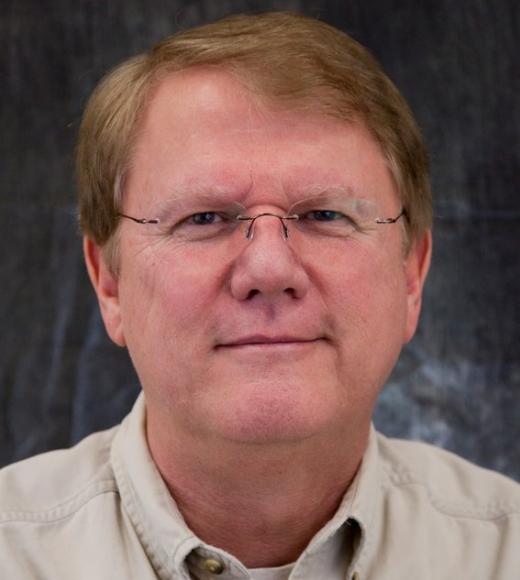
Professor Roger L. Davis
Department of Mechanical & Aeronautical Engineering
University of California, Davis
One Shields Ave.
2104 Bainer Hall
Davis, CA 95616
davisrl@ucdavis.edu
Recent Research Efforts
Research is ongoing in the area of numerical simulations of steady- and unsteady-flow in multi-component gas-turbine components. This research is focused on development and validation of advanced numerical algorithms and turbulence models as well as uncovering new unsteady-flow physics that lead to degradation of aerodynamic and aeroelastic performance, durability, and stability. In addition, research is ongoing on new innovative cycles for gas-turbine engines that use inter-stage turbine burners (reheat). Research is expected to continue in this field as well as in new areas related to turbo-pump fed rocket engines. Please some details of recent efforts at the following sites:
Turbine Main-Secondary Coupled Steady-Flow Simulation
Unsteady-Flow Simulations of Multi-Component Turbomachinery
Innovative Gas-Turbine Cycles Using Inter-stage Turbine Burners
Current Research Efforts
Research is currently underway with PhD and Master's students on turbomachinery simulations and computational fluid dynamic algorithms. These areas include:
- multi-blade row compressor stall inception
- accurate prediction of unsteady pressure in transonic turbine stages
- large-eddy simulation
- compact, high-order discretization schemes
- automated, adaptive grid-embedding procedures
- large-scale, parallel computing
Research Facilities
One our primary research tools is a 20 node Beowulf cluster.
Personal Background
Upon graduating from Ohio State University in 1975 with B.S. and M.S. degrees in Aeronautical and Astronautical Engineering, Dr. Roger Davis began his engineering career at Pratt & Whitney in East Hartford, Connecticut. From 1975 to 1981 he was a Senior Analytical Engineer Responsible for developing and improving computational prediction techniques for turbomachinery flow fields, including a 2-D compressible potential flow analysis, 2-D boundary layer solvers, and 2-D and 3-D Euler codes. In addition, he participated in and directed a number of experimental programs on linear cascades.
During this period, he also attended the University of Connecticut to pursue a Ph.D. degree in Mechanical Engineering in the field of Computational Fluid Dynamics. In 1981 while on a leave of absence from Pratt & Whitney, Dr. Davis completed his Ph.D. dissertation that involved the development of a new 2-D and 3-D finite-element Navier-Stokes procedure for internal flows. In 1982, he returned to work at Pratt & Whitney where he developed inviscid/viscous interaction and Navier-Stokes prediction methods for turbomachinery cascade flows.
Dr. Davis transferred to the United Technologies Research Center in 1983, where as a Research Engineer, he developed various viscous computational schemes including an inviscid/viscous interaction analysis for isolated airfoils, a streamfunction/vorticity transport analysis for 3-D external incompressible flows, and a time-marching Navier-Stokes/Euler technique for turbomachinery blade passage flows. In 1987, Dr. Davis was promoted to Senior Research Engineer and in 1991 took on the position of Senior Principal Engineer where he continued to perform research and development of new computational prediction techniques and design systems. He was a Senior Consulting Professor at Stanford University where he worked between July, 1999 until September, 2003 on a Department of Energy contract in the Accelerated Strategic Computing Initiative (ASCI) program. Dr. Davis continued at UTRC with the position of Senior Consulting Engineer where he was responsible for technically leading in the development of aerodynamic and aeroacoustic prediction techniques for fluid machinery systems.
Dr. Davis transferred to the University of California, Davis in 2002 as a Professor in the Mechanical & Aeronautical Engineering Department where he teaches fluid mechanics, air-breathing propulsion, advanced turbomachinery, and parallel computing as well as perform research on gas-turbine simulation, design technology, and computational fluid dynamics. He is the author or co-author of over 60 internal and external publications including 25 refereed journal articles. In addition, Dr. Davis has authored numerous government contract proposals and external presentations to universities and government research laboratories. He has served as the principle investigator or program manager for numerous government contracts. He also is currently an associate editor of the ASME Journal of Turbomachinery. Dr. Davis is the recipient of numerous internal and external awards including the 1991 and 1995 UTRC Outstanding Achievement Award, the 1992 UTC Horner Citation, best paper awards in 1993 and 1994 from AIAA and ASME, as well as the 1988 Gas Turbine Award from the ASME International Gas Turbine Institute.